HORSE MUSIC – CROSSCURRENTS BETWEEN JAZZ AND FOLK


‘When you know the script you enjoy the show’. The following is the script of a record recital given by MIKE BUTLER at Manchester Jazz Society on Thursday, 21 June, 2018, with the response of MJS members. Oddfellows potman Henry Moss joined the MJS and was made welcome. 


Whither jazz and folk? Henry, Mike and Don Lee in discussion


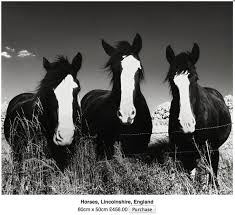
The title is a reference to something Louis Armstrong said when asked about the relationship between folk and jazz. He said, “All music is folk music. I ain’t never heard a horse sing a song.” This is very astute and so true that nothing more really needs to be said on the subject.

[Prolonged pause. A nervous laugh. This ploy to break the ice doesn’t go down as well as Mike hoped, and so he pushes on…]

My field of specialisation when I was an over-employed music writer was jazz, but since becoming an under-employed music writer I’ve been working on a book about folk. So I tend to sit up and take notice when the genres collide or overlap, and even if they’re separated by a wide gulf, the difference can be revealing. 

Going back to the swing years, the jazz singer who did most to promote British folk music was undoubtably Maxine Sullivan. And she really got around, covering England with ‘Barbara Allen’, Ireland with ‘Molly Malone’ and Scotland with ‘Loch Lomond’, and all without moving from 52nd Street, the famous ‘Swing Street’, in Manhattan. At one point she and the John Kirby group moved from the Onyx to The Famous Door, which was next door, and reputedly the smallest and smokiest dive on 52nd Street. The group, a sextet, almost crowded the place out by themselves. A reporter from The New Yorker visited The Famous Door, and observed “it’s practically impossible to be a devotee of hot music and fresh air at the same time”. The conditions make Maxine and the Kirby band’s achievement all the more extraordinary. Never was jazz more plaintive, gentle and enchanting: –
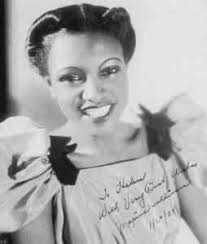


MAXINE SULLIVAN, ‘Just as the Tide Was A’ Flowing’

Note the swinging Sailor’s Hornpipe; the musicians quote the Wedding March to signify a happy union, a trick they repeat in ‘Barbara Allen’ in blithe disregard of the fact that ‘Barbara Allen’ is a tragic ballad which ends in the death of the separated lovers. So the musicians rapidly change tack and tag on the chords of Chopin’s Funeral March. It’s wonderful!    

My book – the working title is Found Out Musical Tunes – touches on folk music, social history, recording technology and record collecting, and the point of focus is the prolific folk producer and engineer Bill Leader. My next selection, which might count as ‘horse music’, was recorded by Bill in a pub, The Nag’s Head, in Southery in the Fens, on August 6th 1962, a Bank Holiday Monday. It’s a paean to a magnificent team of horses, who are mentioned by name as Captain, Short, Boxer and Ball. Not much happens – the horses are watered and put to bed – but I find the performance exhilarating. It somehow convinces that all is for the best in the world and virtue is its own reward. The pay-off line, ‘straight way is the best’, fills the heart with an inexplicable joy. The hero of the song, the waggoner, is a good bloke, and clearly the singer is too, with his rousing voice. This is ‘Four Horses’ by Hockey Feltwell.    


HOCKEY FELTWELL, ‘Four Horses’

Hockey came in late because he’d been out driving a lorry all day. Hockey Feltwell’s dad was the waggoner, and it was his dad who taught him the song. Hockey himself got his start on tractors and graduated to heavy vehicles rather than heavy horses. In its own way, ‘Four Horses’ is as Arcadian as ‘Just as the Tide Was A’ Flowing’. It summons a time when there was a direct connection between people and the land, and when the world was based on horses. Has such a time existed? Was folk song in its classical form ever the popular music of the industrial proletariat? These are hard and searching questions. One of my interviewees, Reg Hall, an authority on Irish and English folk and a great jazz enthusiast, put it to me like this: “We’ve got all sorts of prejudiced views that everybody was singing ‘A Sailor Cut Down in His Prime’… but, you know, were they?” For that matter, did mill-workers in Wigan cavort to an early form of jug band music? Here is the evidence that they did… 


OLDHAM TINKERS, ‘John Willie’s Ragtime Band’

Apparently kazoo bands flourished in Lancashire in the early years of the twentieth century, peaking in the 1930s, which happened to coincide with the Depression. Kazoos were the poor man’s musical instrument, and they came out in force every year at Oldham’s annual carnival. The song, ‘John Willie’s Ragtime Band’, was recorded in 1916 by George Formby Snr. It’s unlikely the Lancashire musicians were aware of Cannon’s Jug Stompers or the Memphis Jug Band, but clearly ‘John Willie’s Ragtime Band’ is an answer to ‘Alexander’s Ragtime Band’, Irving Berlin’s great hit from 1911. The Oldham Tinkers version was recorded in 1974. The singer, John Howarth, is always at The Oddfellows in Middleton on Monday nights. Is John Howarth still at The Oddfellows on Mondays, Henry? [Mike has to wake Henry up and repeats the question. Henry breaks into an encomium about the Oldham Tinkers and enjoins the members of MJS to visit Oddfellows. Peter Caswell says he knew ‘John Willie’s Ragtime Band’ in infancy because his mother used to sing it, testifying to its pre-war popularity in Lancashire.]

The Lancashire jug bands went unrecorded, as far as I’m aware, but we have examples of jug bands from the States, because the recording industry was so much more advanced over there. Did Oldham kazoos sound anything like Memphis kazoos, I wonder? 


CANNON’S JUG STOMPERS, ‘Walk Right In’

That’s Cannon’s Jug Stompers, with Gus Cannon on vocal, banjo and jug, recorded in Memphis, in 1929. Does anyone remember the teatime music programme hosted by Wally Whyton which had ‘Walk Right In’ as its theme? [No-one remembers but Don informs that ‘Walk Right In’ was a hit for The Rooftop Singers in the sixties.] Oh well perhaps I dreamt it. 

I’ll let the next tracks run together. The link is fairly obvious, but I’ll say that the artists are Maxine Sullivan, Fletcher Henderson and John MacDonald.  


MAXINE SULLIVAN, ‘Loch Lomond’
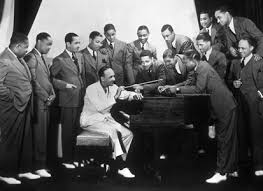


FLETCHER HENDERSON, ‘What Do You Hear From the Mob in Scotland?’ 
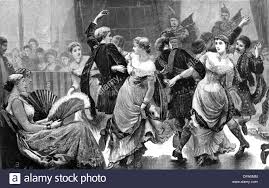


JOHN MacDONALD, ‘The Ball O’ Kerriemeer’ 

Right. After Maxine’s ‘Loch Lomond’, backed by John Kirby and His Orchestra, we had Fletcher Henderson and His Orchestra jumping onto the Highland bandwagon to ask ‘What Do You Hear From the Mob in Scotland?’ (Henderson operated out of Chicago rather than New York.) 

John MacDonald, recorded in 1974 in his caravan home in Morayshire, answers Fletcher's question. The mob are having a high old time.

Novelty, you say? Maxine Sullivan transcends the novelty tag in a way that Fletcher Henderson doesn’t attempt. Maxine is among the most enchanting women of jazz, and is in many ways the antithesis of Billie Holiday. It depends on whether you want your singers fragrant or ravaged, or go for songs of innocence or songs of experience. [Peter Caswell reminds that Mazxine Sullivan was the guest of honour when Oldham hosted the International Duke Ellington Conference in 1978, and praises her undimmed graciousness and beauty.] But there’s little doubt that Scotland, England and Ireland are sites of fantasy to Maxine, whereas jazz artists from Django Reinhardt on created a distinct identity by recasting their own native traditions in the jazz idiom. This could be the subject of a talk in itself, but here is pianist Tete Montoliu with two Catalonian folk songs, ‘El Testament d’Amelia’ and ‘Cançó de Lladre’, playing from the depths of his Catalonian soul: – 


TETE MONTOLIU, ‘El Testament d’Amelia/‘Cançó de Lladre’

[The piece earns a spontaneous round of applause. Lorraine comments, “That's beautiful.”] 

I played Tete Montoliu, but I could have played Kudsi Erguner from Turkey or Reem Kelani from Palestine or Jan Garbarek from Norway or Monty Alexander from Jamaica or Ivo Papasov from Bulgaria or Gilad Atzmon from Israel. It seems that every patch of earth has its own distinctive flavour, made be manifest in jazz or single malt whisky. In that way, jazz music is folk music too. 

Here is Bob Davenport, from a private recording made at Walthamstow Folk Club in 2005, singing straight from the depths of his Geordie soul. It's the most stentorian version of 'Lover Man' ever. 


BOB DAVENPORT, ‘Lover Woman’ 

Bob follows the song with this explanation: “The reason I sang that last song was I had all the 78s of Billie Holiday and she sang at the Albert Hall in 1954, and I went along to hear her sing. That was quite a thing. In fact I nearly got up to sing with her. She said, will anybody from the audience come down and join me and... I’d organised them to come and hear this unique occasion, Billie Holiday, and so they were all there. ‘You know this song, go on Bob.’ But I was at the back and you had to climb over this... [indistinct]. And I wouldn't sing in public. Anyway, another guy came up and took my place.”    

Bob and Billie. Now that would be interesting. It shouldn’t surprise that Bob Davenport loves Billie Holiday, or that Norma Waterson is devoted to Ella Fitzgerald. It would be daft and presumptuous to think that folk and jazz musicians live in a hermetically sealed world of folk and jazz. There’s no law to prevent jazz singer Ottilee Patterson making an album of Irish songs (Ottilie’s Irish Night) and folk singer June Tabor making an album of jazz standards (Some Other Time). There might, however, be explanations why both are such stinkers. Perhaps we can hazard some general principles:
  1. Style defines category not repertoire. This is why Peter Pears can sing ‘The Foggy, Foggy Dew’ till his face is blue but he’ll never be a folk singer. And… 
  2. Every form of music has a regulation voice. This applies as much to your favourite music, be it jazz or folk or blues, as it does to your least favourite music, be it hip-hop, death metal or grime (I don’t know what grime is either). I suppose this leads towards the psychology of subjective taste, which might be an interesting area of study. Anyway it explains one’s instinctive reaction to horrible music in public spaces, and most music in public spaces is horrible, as I don’t need to tell you. 

Before we turn to pieces that transcend the labels, it might be worthwhile to consider the different uses and methods of jazz and folk. Jazz is continually exploring new directions. Jazz musicians spin variation after variation on simple themes. Could you call on John Coltrane? Or they might pare a melody to its essence, like Miles Davis. Here is ‘Bye Bye Blackbird’ by Miles Davis and John Coltrane, recorded at the Newport Festival on July 4, 1958, with Miles, Coltrane, Cannonball Adderley, Bill Evans, Paul Chambers and Jimmy Cobb. Note the contrast between Miles’ spareness and Coltrane’s effusiveness. This is a striking example of what jazz does best.  


MILES DAVIS, ‘Bye Bye Blackbird’

‘Bye Bye Blackbird’ belong to the world’s joint stock of great songs. In other words, it’s a standard, and anyone can have a go. ‘Bye Bye Blackbird’, or ‘Bye Bye Skipper’, as sung by Mike Waterson, demonstrates what folk can do best, which is about bridging generations and reshaping an old song with such integrity that it becomes your own… Actually that applies to jazz as much as folk, but you couldn’t mistake Mike Waterson for Miles Davis, even in the dark.


MIKE WATERSON, ‘Bye Bye Skipper’ 

There was a moment when jazz, rock n’ roll and folk were united, before things diversified and got segregated. Skiffle was that moment, and it contained both jazz and folk, and, in embryo, rock. The Beatles started as a skiffle group. It sprang entire from the trad jazz scene, and ‘Rock Island Line’, the song which kicked the whole thing off, languished for a year on a Chris Barber 10” LP ((New Orleans Joys), before some bright spark at Decca backed it with its skiffling companion, ‘John Henry’, and released it as a single in 1955.  

Here is some prime skiffle from 1956. It’s an old union song, actually a parody of a hymn – ‘Round and Round the Picket Line’ by Hylda Sims and the City Ramblers. When it’s done I’ll tell you two or three interesting things about Hylda Sims. 


HYLDA SIMS & THE CITY RAMBLERS, ‘Round and Round the Picket Line’

Right. Did you know that Hylda’s dad, Tom Sims, sold herbal remedies in Petticoat Lane market and co-founded the Communist Party of Great Britain? He seems to have been written out of history (at least he doesn’t have an entry on spartacus-educational.com). Or that Hylda and the City Ramblers starred in a 1958 Russian film in Magicolor, the Soviet version of Technicolor, with a title that translates as A Girl With Guitar? Or that Hylda is a published poet and novelist and still performs? Hylda is a marvellous woman. 

So to close the first set, from the skiffle era, I’d like to offer an example of perfectly integrated folk and jazz, or so it seems to me. It comes from one of the Radio Ballads, a unique hybrid in itself, created by Ewan MacColl and Charles Parker and Peggy Seeger, being a mixture of recorded interview and original song with a documentary purpose. This comes from the second Radio Ballad, Song of a Road, broadcast by the BBC Home Service on November 5th, 1959, about the road building programme that was visibly changing the nation. The piece is identified by the first words spoken, ‘We Are the Consulting Engineers’, and the first singer is Jimmy MacGregor, followed by Ewan MacColl, who carries the rest of the piece. The clarinetist is Bruce Turner and the trombonist is Bobby Mickleburgh. 
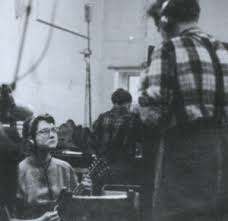


EWAN MACCOLL, ‘We Are the Consulting Engineers’ 

The jazz in ‘We Are the Consulting Engineers’ is of the sprightly trad variety. Further transformations took place when modern jazz gained a foothold in the folk community, as we shall see in the second half. 

*


When I tell you that Miles recorded ‘Bye Bye Blackbird’ in 1958 and Ewan MacColl recorded ‘We Are the Consulting Engineers’ in 1959, you can see how far Britain lagged behind the U.S.A. in jazz tastes. Davey Graham did more than most to bring the folk division up to speed in terms of the advances in jazz. Graham revolutionised guitar playing in the UK. Up to this point the British guitarist had been a simple strumming skiffler (I’m simplifying somewhat but let it pass). Davey Graham had Thelonious Monk tunes in his repertoire. He travelled around Europe and Africa and brought back exotic tunings. DADGAD is his discovery. He was wont to sprinkle traditional Irish songs with raga-like passages. There are pages and pages of web content devoted to his influence on Jimmy Page, most of which isn’t worth reading. Davey Graham went farther out than anybody, musically, geographically and, sadly, chemically. At Alexis Korner’s instigation, Bill recorded the guitarist one day in 1960. The setting was domestic. In fact it was in his mum’s kitchen. At the time Mrs Leader lived below her son in a garden flat at North Villas, Camden Town. This is the tune Bill recorded...



DAVEY GRAHAM, ‘Anji’

‘Anji’, a simple enough tune, spread like wildfire. It was on every guitarist’s fingertips. Bill talks of going to Glasgow to record an anti-Polaris demonstration. Lots of young people had foregathered in a Glasgow square, waiting for the demo to begin, and there were many dozens or perhaps a hundred young men with guitars. Bill says, “as you walked around the square, you would float into one person’s interpretation of ‘Anji’, and as you walked past you would move into another one.” It was like something by John Cage, Bill says. Everybody played ‘Anji’. Never mind ‘Blowing in the Wind’ or ‘The H-Bomb’s Thunder’ – ‘Anji’, a guitar instrumental, was the true sound of protest in the early sixties.

So, to honour the ubiquity of ‘Anji’, even if the spelling is variable (sometimes it’s A.N.J.I. and sometimes A.N.G.I.E.), here’s a second ‘Anji’. This comes from Bert Jansch’s debut album in 1965 and Bill recorded it in his bedroom at North Villas. So two floors apart from Davey Graham. “He was quite keen to do it,” Bill remembers. “He’d just put his foot through his own guitar so he had to borrow one, and had to be careful he didn’t put his foot through that. He sat on the bed, and I stuck up the one and only mike that I had and plugged it into the one and only tape machine that I had… and he just sang.” Or played.


BERT JANSCH, ‘Angie’

Notice the terrible sound quality. 

The technical term is dropout and it happens when the tape moves away from the head causing a momentary wobble in the audio. “It’s my worst recording,” says Bill, “and it’s probably been more played than any other.” Poor quality tape is responsible, but it was all Bill could get hold of. The recording was made on spec, and Bill eventually sold it to Transatlantic for £100. Bill kept thirty and gave Bert seventy. The record has never been out of print since 1965, and the 50th anniversary of its release in 2015 was marked by a super deluxe edition, which must have been a challenge to the sound engineering department. t

Did anyone recognise the quote? [Bob, Frank, Eddie and everybody else did: shouts of ‘Work Song’ and ‘Nat Adderley’.] From quotes like this, the choice of repertoire and various references on Pentangle and related LPs by Bert Jansch and John Renbourn, you can build up a picture of their listening habits at the time: English traditional singers, the Staple Singers, Charles Mingus – lots of Charles Mingus – Coltrane, Booker T and the M.G.s, Elizabethan madrigals, Moondog, the blind New York street performer, and this, which Jansch quotes on the instrumental ‘Smokey River’, also from his debut album. Shout when you recognise it. 
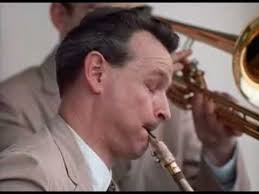


JIMMY GIUFFRE, ‘Train and the River’

[Mike the treasurer, instantly, “‘Train and the River’!”] The second selection of the night from the 1958 Newport Jazz Festival, ‘The Train and the River’ is characterised by its graceful weave of jazz, blues and folk. It demonstrates how the most creative players in the U.S. were on the same route as advanced English folkies, albeit travelling from the opposite direction. Great musicians have never scrupled to borrow tunes. Ian Dury was nervous upon meeting Charlie Haden, Ornette Coleman’s bassist. He apologised for lifting the riff of ‘Sex & Drugs & Rock ’n’ Roll’ from a phrase in Haden’s solo on ‘Ramblin’’ from the Coleman album, Change of the Century. Charlie told Ian not to worry: he’d nicked it himself from ‘Old Joe Clark’, an old-time hillbilly tune. 

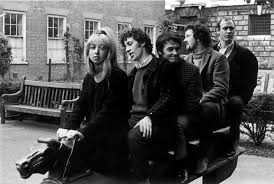
There are lots of Mingus tropes on our next selection. You can tick them off as they come up. ‘Waltz’ is from the first, eponymous Pentangle LP, from 1966. Pentangle were Jacqui McShee on vocals (not heard here), Bert Jansch and John Renbourn on guitars, and, crucially, the experienced jazz rhythm team of Danny Thompson on bass and Terry Cox on drums, who were in the house band at Ronnie Scott's for a spell. You might describe this as warmed over Mingus, but, as we know, if you change the context, you also change the meaning, and in the context of British folk this was electrifying (if ‘electrifying’ is the right word)... 
  

  PENTANGLE, ‘Waltz’ 

If I may inject a personal note I first noticed Tony Coe, Henry Lowther, Lol Coxhill, Chris MacGregor and Dudu Pukwana as names on folk, or folk-rock records? I knew ‘The Theme from The Pink Panther’, of course, but I didn’t know it was Tony Coe until much later, whereas he gets a credit for his tenor sax obligato on ‘Solid Air’, which is so crucial to the atmosphere of the song. Folk-rock and, let’s not forget prog-rock, which also had a subterranean jazz element, primed me for the real thing. I’m glad though that I came across Danny Richmond in the conventional way, as the drummer with Charles Mingus, rather than a sideman on Bert Jansch’s Moonshine, an album from 1972. I recommend the version of ‘The First Time Ever I Saw Your Face’ from Moonshine, which boasts the unexpected conjunction of Danny Richmond and Mary Hopkin. And so it was that on the day I got three O levels at school I celebrated by joining Middlesbrough Central Library’s record library and the first record I took out was Tijuana Moods by Charles Mingus. It was a revelation. And what is Tijuana Moods but a grand synthesis of blues, bop and swing with something else: something we can only call folk music, albeit of the Mexican variety.

[For a change nobody asked, but the line-up is Charles Mingus, bass; Jimmy Knepper, trombone; Curtis Porter (Shafi Hadi), alto saxophone; Clarence Shaw, trumpet; Bill Triglia, piano; Danny Richmond, drums; Frankie Dunlop, percussion; also Isabel Morel, castinets and voice.] 


CHARLES MINGUS, ‘Los Mariachos’

Sometimes there are extra-musical reasons for jazz and folk crossover. (I can’t bring myself to say the horrible ‘f’ word; crossover is bad enough.) What, for example, if you’re the best Irish traditional singer in the world and the best jazz guitarist in the world happens to move in four doors down from your house in Rossendale? Naturally you get along famously. Making music together is the obvious next move. Such was the case with Donal Maguire, the great Irish traditional singer in question, and Mike Walker, a jazz guitarist of local and international renown. Donal Maguire’s album, Gilded Chains and Sordid Affluence, from 2001, resulted from the collaboration. ‘Little Bridget Flynn’ is the lead track. The saxophonist here is Iain Dixon.



DONAL MAGUIRE, ‘Little Bridget Flynn’ 

And what happened when Stuart McCallum, the cool, calm, urbane guitarist, a mainstay of Mancunian jazz, met Rioghnach Connolly, a lass from Armagh in Northern Ireland, steeped in traditional Irish song, who has made Manchester her base? Answer: they formed a group called The Breath and signed to Peter Gabriel’s Real World label. The second album is imminent. I was given the task of writing the press release, so I’m well placed to give you the story behind our next song, ‘Let It Calm You Down’… 

The scene is Matt and Phred’s, a club, as all we know, noted for its noisy and inattentive audience. The long hours and tiny fees absolve performers of any obligation except to please themselves, which is the first rule of the artist anyway. And so Stuart and Rioghnach, together with John Ellis, Luke Flowers and Sam Vicary – collectively known The Breath – were taking the opportunity to try out new things. Rioghnach, alas, has been in a foul temper all night, and is slightly the worse for drink. Stuart starts to play something loosely based on a solo arrangement he once made of the standard ‘Bewitched, Bothered and Bewildered’. The band follow. At this point Ellis Davies, Rioghnach’s boon companion from her bar-room band Honeyfeet, walks in, and settles at the back within Rioghnach’s direct line of vision. She discerns him through a red mist. The rest of the audience disappear and only Ellis remains. She sings directly to him; in Rioghnach’s words, Ellis is “my soul mate in the crowd, the only bastard that can calm me”. She plucks the words from the air, and this is what happens, quite spontaneously…


THE BREATH, ‘Let It Calm You Down’

If you remember, the last words of the film Chinatown are, ‘Forget it Jake, it’s Chinatown’. Chinatown is not a place, but a condition of life where the individual is helpless in the face of all-encompassing evil. So even Rioghnach’s most gorgeous love song must have its little barbs.  

Next… Quite serendipitously, I found a jazz take on ‘Brigg Fair’ among my jazz CDs at home. It’s by the Avalon Trio, who are Pete Churchill on piano, Tony Woods on saxophone and Rob Millett on percussion. As the name suggests, they’re attempting to summon the old elegiac pastoral spirit of England…


AVALON TRIO, ‘Brigg Fair’ 

I’ll fade it there [after one and a half minutes], because it changes into something else, and there’s still a bit of ground to cover, and those tablas are really horrible. 

[Mike the treasurer testily says, “You chose it. Why put it on?”] 

It leads to something I wanted to say about ‘Brigg Fair’, which was among the songs Joseph Taylor sang into Percy Grainger’s new-fangled phonograph machine in 1906 in Lincolnshire. In Brigg, actually. Grainger alerted his chum Frederic Delius who wrote it up as a full orchestral work. He called it ‘An English Rhapsody’. In 1908 Grainger invited Joseph Taylor to London to an early performance of ‘An English Rhapsody’. Sadly, the legend that the singer got to his feet and sang along to ‘his tune’ turns out not to be true. But Grainger took Taylor to the Gramophone Company, where he made some records which were released commercially on 78. He was marketed on the label as a ‘Genuine peasant folk-singer’. Someone (Lea Nicholson) once told me that this marked the beginning of the commodification of folk music. That’s a very hard line, in my opinion.

I haven’t got Joseph Taylor singing ‘Brigg Fair’, but here he is singing ‘Creeping Jane’, recorded by Percy Grainger on the same occasion in 1906. It hasn’t got anything to do with jazz but it is about a racehorse, so I can justify its inclusion by the horse theme. It’s also inherently interesting to listen to something so old.   


JOSEPH TAYLOR, ‘Creeping Jane’ 

To close, I’d like to finish where I began, in the company of Maxine Sullivan. ‘If I Had a Ribbon Bow’, one of the more unusual songs of 1940, caused an altercation between Eva and myself because we both want it played at our funerals. We’ll have to arrange to go together… [Eddie says “Don’t push your luck.”] 


MAXINE SULLIVAN, ‘If I Had a Ribbon Bow’

I could mention that ‘If I Had a Ribbon Bow’ was the debut single by Fairport Convention, a band much influenced by West Coast psychedelic rock but clearly with wide-ranging tastes. They were shortly to invent folk rock with the album, Liege and Lief, but that’s another story. 

Thank you and goodnight.


Re. a return to childhood in dreams...


Is anyone out there interested in my dream diary? There was no interest in my thoughts about Mark E. Smith, my last blog, which plateaued at 9 views (at least one of them was me). So I can’t really hope that my dreams will fascinate the wide public. Nevertheless… 

I was naked and running pell-mell for home (this from a week or so ago). The people I passed were unconcerned. They were far too jaded to bother about a naked man. Nakedness is even at the boundaries of social acceptability in some circumstances. But in my dream I was self-conscious and uncomfortable. I happened to be passing very near my childhood home, so I thought, I’ll pop in and put some clothes on and everything will be alright. I raced down a back alley I recognised (gated in real life, but open in my dream, as in my childhood). I was very nearly there when a terrible thought struck me: “Where are my keys?”


I think everybody in the world must have had this dream or a variation of it. I lay awake and brooded on it awhile, and when I went back to sleep I had a dream which treated of the same themes, but was far too baroque and unreal to describe here.  


And then last night I dreamed I was back in primary school. Those of us who hadn’t yet eaten were told to put up our hands. (There was a crisis in the school canteen, presumably.) I raised my hand, not feeling particularly hungry or aggrieved, but privately hoping that we might be sent home. But then the parents of the children who had already eaten rounded on those of us who had gone without, and remonstrated with us as if was our fault, and the scene got very ugly indeed. It was a vivid dream, though I have no recollection of any such incident in life. The gap of about a minute between the teacher saying a thing and my comprehension was a very lifelike detail, and something I’d completely forgotten about.  


Mark E. Smith - Memorial and Memorabilia


For me, Mark E. Smith is a greater loss than David Bowie. Let’s just say his chief virtue was that he dealt with the concrete, things which were really there, as opposed to fantasticalities. The prime merit of his work was its truth. He was free from any affectation or pretentiousness. You could happily go for a drink with Mark E. Smith in a way you could never with Bowie. I never did, but I can imagine the sparkling table talk. What made him an entertaining social companion was the same thing that made him a lyricist of genius: you never knew what he was going to say next. 

Example (from one of two lyrics I have in front of me): 

I meet my old friends there/ They queue up for cash there 
They are part Irish / They have no conscience 
And they get threatened by the Cracker Factory 
2 steps back (Cracker Factory – A place where you get into the ‘working routine’ again. = Re-habs
                                             for no hopes = Pre-fabs for Jobless Dopes) 

2 steps back in. 

Mark E. Smith could never have the appeal of Bowie because fantasy is always more palatable to the masses than truth. But fantasy is a juvenile pastime, and the condition of present-day pop culture attests to the deleterious results of arrested development. Whereas too much reality leads to grumpiness. Mark E. Smith balanced grumpiness and playfulness brilliantly, until they become two sides of the same coin. Most of his lyrics are reportage (never straight reportage), but his powers of observation are acute, and given an edge by a unique sensibility, which is working-class, caustic, subversive and absurdist. The Fall's music is punk of uncompromising truculence, yet open to esoteric experiments and surprise undercurrents (he was a fan of Northern Soul and Roy Wood’s Wizzard). As rooted in the moment as a snapshot, the music actually sounds better from the perspective of mid-life, as if the band’s listeners’ physical age caught up with the spiritual age of their hero. Smith's great achievement was to harness existential rancour to rock ’n’ roll, a juvenile art-form, with unlovely and paradoxically optimistic music.

I have come not to bury Mark E. Smith but to praise him, or at least exhume some of his ephemeral scraps. I’ve made a modest collection of Mark E. Smith memorabilia over the years. It started with some papers I found secreted into my second-hand copy of The Peel Sessions (Strange Fruit, SFPS028, 1987). These included a cutting from NME, 14 Nov. 1987, with The Fall's UK Discography; a photocopy pic of Marc E. Smith next to a list of the line-up (Marc Riley era) in a handwritten scrawl (“yes 6 like dice”); a typed sheet of the words of ‘Two Steps Back’ and ‘Rebellious Jukebox’ (direct from the man, see below); a press release from 1978, which bears evidence of Mark E.’s unique prose style (“i.e. Who will crack first? Will it crack at all? Will you crack?”); and, as piece de resistance, a letter. It reads: 

[The Fall, Witch Trials typographic letterhead] 

May ‘79 

Dear Dave, 

Thanks for the present of your poetry & letter. The flow of your writing is Brill. All hail Joey. Stockport is a funny place, I’ve a lot of friends there. 

Hope contents suffice, would’ve been more but I’m a slow typer & no paper! Do you wear badges? 

Thanks for support & stimulation. 

Rays of affections 
R. Totale XVII Mark ESm. 
mes/mes 
(2 people at once) 
for the fall.

P.S. keep going and we will too.

To these I’ve added extra items which came my way courtesy of Ra Page, City Life (Manchester What’s-On) colleague and erstwhile City Life editor. One is a two page prose work (Ra was always soliciting short stories and would sometimes publish them as City Life supplements) called No Place Like It. It ends: 

"It's crap out there isn't it" Says JOE 

"Damn right it is" 

"Let's form a Party" sez FRANK. 

There there is a page of handwritten answers to typed questions headed OUT TO LUNCH WITH... CITY LIFE QUESTIONNAIRE. As follows: 

Name? SMITH, M.E. 

How often do you go out drinking? (and where?) 

3-4 times a week if flushed, which is rarely. I drink Holt’s bitter, not because it’s cheap, but because it’s the best beer in the world, bar none. I know because I’ve drank all the world’s beers. In the past on long tours I used to suffer ‘Holt’s Withdrawal’. 

How often do you eat out? (and when?) 

All the time if I’m away but in M/CR not so much as I used to, it’s too suffocating and pretentious now. Julio’s Terazzia was the best until it [illegible] on Coronation St and like K2 [?] (Walpoles). he’s the best [illegible] ever. The Prachee [?] at Heaton Park is spot on, too. 

Worst experience? (where) 

Vomiting all over a local T.V. executive in a crowded exclusive M/CR restaurant about a year ago, about Noon – but I think that had as much to do with him as with the place. I can’t stand eating with music/media types, they talk rot and are always surprised I know more about food etc. than they do. 

Do you cook at home much? 

Yes, my roast beef sandwiches have made both grown intellectuals and hoodlums weep with pleasure. 

What would improve Manchester's food and drink scene? 

It’s ridiculously expensive for what it is compared to virtually anywhere else – be it Rossendale or America, but that’s maybe rent etc. Also, in M/CR no bars seem to have heard of a clean, cold glass – most places’d get trashed if they were in Glasgow or someplace. And I’d argue it’s even harder now to get a decent drink after 11p.m. than it was in the early 80’s. 

This is accompanied by a handwritten note written on tatty, lined paper, torn off when the message ends: 

From M.E. SMITH 
PRESTWICH 
M/cr 
11 JUL. ‘99 

To: RA PAGE 
CITY LIFE 
M/CR 

Dear Ra: 

RE: FOOD ARTEFACT 

The Nepalese is actually called KAILIL on George St. Also the New Emperor is v. good too. 

Also, got cheque for a £100.00 – is this correct? My phone’s bust, so write me. 


All the best...   

eBay: Watersons in English Folk Records Shock


Facts must be faced – eBay is no longer fit for purpose! It’s been creeping up a long time. Paralysis by incremental 'improvement' is a common form of degradation in the modern world. 

I admit it. I love my folk and I love my vinyl. That might put me in a double minority, but does the persecution have to be so blatant? 

Going to ‘Folk LP Records’ on eBay, the page invites you to ‘shop by sub genre’. Very well. Here is ‘English Folk’ and then there appears to be some sub-sections: ‘Progressive’ and ‘Classic’. This is intriguing because ‘Progressive’ and ‘Classic’ are meaningless, not to say antithetical, in the context of folk music. What will we find? 

A click on ‘Progressive’ offers Roger Chapman, Yes, Atomic Rooster and Horslips. This is very fine but not to our purpose. They’re all CDs too, and we want vinyl. A Watersons LP on Topic isn’t too much to ask, surely?    

What will ‘Classic’ bring? Click click: Patti Smith, Scorpions and Foreigner. Not Vaughan Williams and Elgar, mind. Patti Smith, Scorpions and Foreigner. All are CDs. 

We’re no closer to finding a Watersons LP on Topic. 

Very well, let’s try 'Filter’. This opens a box which gives various options. Ignoring the ‘Genre’ sub-section, which is subdivided into ‘Classical’, ‘Folk’, ‘Jazz’, ‘Pop’ and ‘Rock’ (we’ve been burnt like that before), the top entry promises ‘English Folk LP Records’, ‘American Folk LP Records’ and ‘Other Folk LP Records’. This is more like it. By now I’m prepared to overlook the slight to the Scots and Irish, not to mention everyone in the rest of the world (barring North Americans), for being indiscriminately lumped together as ‘Other Folk’. 

Oh that filter. To find records that might be affordable, it’s necessary to click on ‘Filter’ again and scroll to ‘auction’. The browser directs to suggested artists, specifically Bob Dylan, Earth (Earth? Earth, Wind and Fire?), Leonard Cohen, Live (?) and Love (Arthur Lee’s outfit?). We shall skip these altogether, knowing that some dark corners are left undisturbed. No, the only way bargains can be had on eBay, in my experience, is by this 'auction' facility. To get this we go to ‘Buying Format’ and click on the ‘auction’ option. I’m in ‘Other Folk’, by the way. Aha! An Owen Hand on Transatlantic with a start price of £5! This turns out to be too good to be true. ‘Record and inner sleeve only’. It would be unfair to blame eBay for the disappointment. 

Now one more box needs to be navigated. That’s the box that says ‘Best Match’. This needs to be amended to ‘Ending Soonest’, whereby auction lists appear chronologically, in the order of those ending first. It is a rational way to view. The default setting, ’Best Match’, is another of eBay's meaningless formulations, like Bid now so you can get a deal, which defies comprehension no matter how long you stare at it.

That’s Other Folk LP Records, but we’re still looking for the Watersons on Topic. ‘English Folk LP Records’. The Watersons have always been English Folk. That’s as true as you can make it.

‘English Folk LP Records’, using the ‘auction’ filter gets you… ahem! Neil Young, X Ray Specs, The Orb, Killing Joke, Muse, Kraftwerk... And on and on. These are all CDs by the way. How far before we find something that remotely resembles an English Folk LP? Let’s see… Gary Numan, Nick Cave, Steely Dan… Free, Poulenc, Syd Barrett… Clearly the compilers subscribe to the Louis Armstrong definition: ‘All music is folk music. I ain't never heard a horse sing a song.’

I’m on page 3 now. Virginia Astley’s lovely From Gardens Where We Feel Secure has been issued on CD, I note, and the owner wants £16 for it…  Page 5 comes and goes without a glimpse of a hey-nonny. There’s Pet Shop Boys but no Pentangle, and (here’s a weirdie!) Aleister Crowley but not Alasdair Roberts. I know Alasdair Roberts is Scottish, but he would be a sight for sore eyes right now. By page 10, I’m ready to give up. There are no English Folk LPs in the section ‘English Folk LP Records’. Not only that, there is no folk in ‘English Folk LP Records’. Actually, there are no LPs either. 

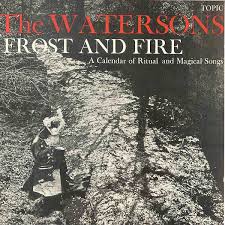
Desperate now, I resort to ‘Search for anything’. I key in ‘The Watersons’.  Do I mean ‘the water on’? No, I do not mean ‘the water on’. What have we got? One result for The Watersons with the auction option. This is a turn up! Frost and Fire, has got five days to run and is listed under English Folk Records! I wish seller rockprof30 well, but I fear this lone jewel might be buried under an avalanche of stones. 

Naturally it's impossible to contact eBay and tell them their English Folk LPs are up the creek without a paddle, if they cared. You can report a seller (‘innocent until proven guilty’ doesn't apply to sellers on eBay), but communication with the eBay behemoth is impossible, meaning the site can self-destruct without ruffling corporate complacency. 


Is Discogs any better? I shall soon see. 

All Merit to Dubjax


This is too obvious to need stating, but all these reviews are written out of deep gratitude to that anonymous philanthropist, Dubjax, who mines our (UK) shared cinematic heritage – British, black-and-white films and ‘B’– to consistently excavate gems we didn’t know were there, and frequently faces the wrath of the copyright enforcers for his troubles. Dubjax 9 is presently flourishing, I’m happy to report.


Stop press: All the films written about below, bar four, have been removed by youtube's copyright enforcers in the past 24 hours (22.2.17). That is, there has been a blanket sweep on every film posted on Dubjax 9. Of the exceptions Castle in the Air and So Long at the Fair are non-Dubjax films, and The Common Touch and Made in Heaven come from an earlier channel, Dubjax 4. Several of the impounded films are freely available on other channels. Namely: –

The Card – https://www.youtube.com/watch?v=DnsGaJpMhoo
Contraband – (poor quality) https://www.youtube.com/watch?v=6hWV6cOHOyA&list=PLDNOvpDaJvEpfIvDXCBpnSEZEt3KuTn-K
Daybreak – https://www.youtube.com/watch?v=e7VSft9ehZY&t=36s
The Ghost Camera – https://www.youtube.com/watch?v=DnsrJOIfi3w
High Treason – https://www.youtube.com/watch?v=ExI9WBqi3pw&t=85s
Midnight Episode – https://www.youtube.com/watch?v=8YloTDTr7xM&t=796s
The Passing of the Third Floor Back – https://www.youtube.com/watch?v=nUL2Lxa0RMA
The Rocking Horse Winner – (Spanish subtitles) https://www.youtube.com/watch?v=KqG19zEKQ-g&t=1009s
Turn the Key Softly – https://www.youtube.com/watch?v=wJzzDzPFOqI

This begs the question, who has got it in for Dubjax and why? Clue: some of the other films are available to stream into the home at a price. In other words, musty old black and whites are not exempt from the laws of free enterprise, competition and supply-and-demand. Some of us happen to think that the repression of rare old films amounts to a cultural crime, that the copyright laws are labyrinthine and stupid, and that the commercial exploitation of old films (some of which recouped their costs over half a century ago) is unacceptable. Sometimes "sorry about that" – as in, The YouTube account associated with this video has been terminated due to multiple third-party notifications of copyright infringement. Sorry about that – is not good enough. 


Boys in Brown 


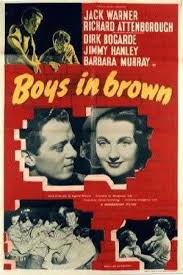
It’s interesting to compare this treatment of Borstal with the account given in The Loneliness of the Long Distance Runner. The latter exposes this tale of the inherently good boy fallen in with a bad crowd for the simplistic, moralising claptrap it is. It also seems that baggy shorts were abandoned at some point between 1949 and 1962. This is a good thing because baggy shorts are the cause of all the trouble. Retrieving civvies is the reason Jackie risks his immortal soul by smashing a custodian's head with a lamp. Jackie is the rough diamond central character, a complete fuck-up, played with one-dimensional petulance by Richard Attenborough, and unaccountably loved by everybody, from the girl who waits (Barbara Murray), to his mother (Thora Hird specialised in long-suffering mums at the time), and even the governor. The governor! To compare the all-wise, compassionate Jack Warner with the flawed, neurotic Michael Redgrave in Loneliness says everything about the collapse of deference to authority in the intervening fifties (an under-rated decade). And how does this paragon of a governor behave? He seeks out the impeccably middle-class natural mother of wayward Bill (Jimmy Hanley), and prevails upon her to take back the lad and oust the feckless working-class type who only brought him up. Such conservatism riddles the entire film. The token Scot is an emblem of unreasonable truculence. Only dark hints about homosexuality could be allowed, but note how Alfie Rawlings, an early essay in malevolence by Dirk Bogarde, anticipates Hugo Barrett in The Servant, and how queerness is associated with twisted pathology. Actually the film has got everything it takes to be a camp classic. The title... the baggy shorts... I see audiences in brown baggy shorts cheering Alfie Rawlings on. 


The Card 


https://www.youtube.com/watch?v=CwYuxxUnI1g 


Based on the Arnold Bennett novel, The Card is about the rise of the irrepressible Edward Henry (‘Denny’) Machin, who works his way to the top from lowly beginnings. And though Machin is an opportunist proto-capitalist, who can fail to warm his nonchalant charm, winningly conveyed by Alec Guinness at the top of his game? There are lots of incidental pleasures, not least from the women in Machin’s life – Glynis Johns as Ruth Earp, a scheming minx and gold-digger whose rise parallels Machin’s own, Petula Clark, adorable as the girl-next-door, and Valerie Robson, the epitome of the high-born English Rose as the Countess (she played much the same role in Kind Hearts and Coronets). The Card treats of labour, class, capitalism, sex as social advancement and demagoguery, and does it with such a light touch that the final triumph of the parvenu over the paternal is guaranteed to stir nothing more radical than a sigh of contentment. 


Carrington VC 


https://www.youtube.com/watch?v=StrO0H-T4h0 


Major Charles ‘Cropper’ Carrington VC (David Niven) is a paragon, a model of charm, ability and reason, beloved by all his men and worshipped from afar by the loyal Captain Alison Graham (Noelle Middleton), whom he properly rebuffs for the sake of his wife, Valerie (Margaret Leighton). There are signs that Valerie is not altogether a worthy vessel for Cropper’s affections, but he piles on the uxorious selflessness with the stiff-upper-lip that is his single greatest attribute. That is, until Valerie gives testimony at Carrington’s court martial, in which his reputation and career hang in the balance. Carrington sees what has been obvious to the viewing public from the start: Valerie is a shrivelled soul and a bitter husk of womanhood, whereas Captain Alison is really quite adorable. There’s not much subtlety about Carrington VC and the response it engenders, but, in its own way, the film is as perfect as its titular hero. Anthony Asquith directed in 1954.  


Castle in the Air 


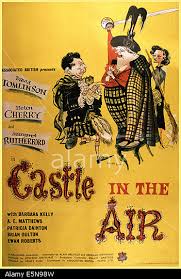
Castle in the Air has some of the pleasingness, silliness and cast of Made in Heaven (see below) and was made in the same year, 1952. It only looks about 50 years older. The plot concerns an impoverished lord in Scotland whose stately home is in danger of being requisitioned and turned into a hostel for National Coal Board employees. Barbed comment on a Labour government and austerity Britain are among the incidental pleasures of Castle in the Air. Another is the presence of that charming fellow, David Tomlinson. No Pet Clark this time, alas, but Margaret Rutherford more than compensates. 


Chance of a Lifetime  


https://www.youtube.com/watch?v=jIqWrqPuIRA


One of Sir Bernard’s (as he then wasn’t) essays on industrial relations. Chance of a Lifetime gives Basil Radford the role of his life as Dickinson, the owner of a small engineering company, who, from words spoken in exasperation and then honoured out of pride, hands over management of his tractor-making plant to the workers. A great social experiment begins. The capital and labour issue which so exercised Marx is handled in a gritty and clear-sighted and exciting way: the deferred delivery of the steel (deferred because bankers and businessmen want to sabotage the venture) serves the same function in this film as the arrival of the cavalry in a western. Its left-wing credentials are impeccable: co-written by Walter Greenwood, author of Love on the Dole, and written and directed by (Sir) Bernard Miles, who also plays Stevens, an unassuming man who accepts his elevation with diligence and a furrowed-brow. Miles, uniquely among British actors of his generation, spoke in his native accent, an attractive West Country one in his case. Who couldn’t side with the workers when the factory is stuffed full of well-loved British character actors? These include future Dr Who Patrick Troughton as trouble-maker Kettle, Niall McGinnis (the sinister Satanist from Night of the Demon) as Baxter, a horny-handed rabble-rouser, and Hattie Jacques as Alice, a  blowsy type who puts him in his place. Bolger, the factory-hand cum poacher, is played by Geoffrey Keen (last seen as an urban terrorist in High Treason, the political polar opposite of Chance of a Lifetime), and more or less ubiquitous in British films of the period (1950, by the way). Best of all, Peter Jones enjoys himself hugely as an East European trade commissar. The film is so good, and so neglected, it invites conspiracy theories of its own. Was it purposely overlooked by TV programmers in favour of-union-bashing films like I’m Alright Jack and The Silence (that is, before every b&w film was purposely overlooked by TV programmers)? You might be inclined to dismiss this as luvvie radicalism or soft left wishful thinking, but seriously, Chance of a Lifetime encapsulates the values we’re all going to have to fight for. If we haven’t already lost them. 


The Church Mouse  


https://www.youtube.com/watch?v=g7gELrQ_FTk&t=68s

It begins by kidding about the march of progress, from the vantage of a thoroughly modern 1934, blessed by the advances of the dictaphone and women in the workplace. There’s an awful lot of kidding going on in the film – which charts the progress of Betty (Laura La Plante) from forgotten woman, super-efficient secretary and blossoming sexual being. Even unemployment is kidded about, although the light tone and comic exaggeration can’t conceal real feeling. This was 1934 and the very depth of the Depression. Mostly the film kids about sex. This is the earliest Dubjax I’ve yet seen, and also the raciest, with characters tenderly swapping Mae West catch-phrases. There might be something to this pre-Code business. Anything more graphic than a kiss, of course, would break the enchantment.  


The Common Touch


Made in 1941, the only direct reference made to the war is when a harmlessly deranged resident of Charlie’s, a homeless shelter (or dosshouse, in the argot of the time), starts ranting in heavy German. “He’s had a sticky time,” explains Tich, the odd jobs man and knocker-upper. “‘E didn’t quite see eye to eye with Master Hitler.” Nevertheless, the unspoken question that haunts the film is What are we fighting for? Closely followed by What do we want from the new world a-dawning? These are weighty questions, wrapped here as an entertaining parable, with lots of delirious musical interludes. Things under imminent threat include cricket, the playing fields of Eton, which is where we first encounter our hero, young Peter Henderson (Geoffrey Hibbert), hitting a six. Peter is an orphan, and about to leave school to take charge of a large City firm. His father was the founder, and it was his dying wish for Peter to take charge when he came of age. But the City firm propose to demolish some property which includes Charlie’s, the homeless shelter. The shady board conspire to hide this from Peter, relying on his callow inexperience. This privileged kid, however, is made of sterner stuff. He and a pal masquerade as homeless youths to go on a fact-finding mission to Charlie’s. A second education follows, and his eyes are opened to the lovable vagabonds, out-of-work musicians and general good eggs who reside at Charlie’s. Some other things under threat include the geegaw toys cherished by a tramp at Charlie’s. “Someday people will turn again to simple, beautiful things,” he says, wringing every ounce of pathos from the words. What started as a ripping yarn about a posh kid has now turned into an arresting polemic. The Common Touch advocates nothing less than the eradication of class distinction and the adoption of a new set of values. This is expressed most overtly in the final scene, where the residents are discussing their new life, now that the threat of eviction has been lifted. “All this talk about better things, homes and all that, do you suppose they really mean it?” “You know I think they really mean it, this time, Tich.” “Blimey, it would be like heaven on earth.” Close-up on the tramp (the one with the toys), radiantly beaming and directly looking at the audience. “And why not?” he says. The music surges. There’s a lot of music in The Common Touch because music is the practical means by which this social transformation is to be achieved. To simplify, the toffs like bossa nova with plenty of razzamatazz, while the down-and-outs go for syncopated jazz. The reconciliation between high and low is achieved when a concert pianist on his uppers (Mark Hambourg) performs Tchaikovsky’s Piano Concerto in the street on a piano on wheels. An orchestra in coat tails join in during a flashback to his glory days in international concert halls. His destitute listeners are enraptured. “The boys like a bit of music,” explains Tich. 


Contraband 


An early Archers, this Michael Powell and Emeric Pressburger collaboration followed A Spy in Black. Contraband has a nice freewheeling structure. Strangers are thrown into each other’s company – he (Conrad Veidt) is the captain of a neutral merchant vessel ship and she (Valerie Hobson) is a passenger who steals his shore ticket. The film follows them as they make their rounds. It’s nicely inconsequential to begin with: London in blackout and fog, a meal in a restaurant with an eccentric, ebullient owner. But then, this being wartime and a propaganda vehicle, she needs must turn into a Mata Hari figure and be kidnapped by a cell of German spies, and he must enlist the staff of the restaurant to rescue her. Hokum after Emil and the Detectives: Emeric's influence, I guess. Fans of the Archers might note the emergence of the charming foreigner figure, quite risky in this context, which reached its apotheosis in the Anton Walbrook character in The Life and Death of Colonel Blimp, who was - shock! horror! – a good German. Churchill wanted to have it banned. Valerie Hobson is a fine actress, and very good in parts where fragrancy is put under pressure (as in real life: she was married to John Profumo). And, if I’m not mistaken, Esmond Knight is actually sighted in this film, it’s so early. An invaluable member of the Archers repertory company, Knight was blinded during the war, and subsequently regularly appeared in character parts in Archers films, indifferent as to whether the role required sight or not. Michael Powell was a loyal employer. In short, Contraband is lightweight but essential Powell/Pressubrger, and is warmly recommended, whereas a later Archers with a wartime theme, Ill Met by Moonlight – www.youtube.com/watch?v=LTeZgbgamGc – is OK to skip, and isn’t on the Dubjax lists. 


Daybreak 


The plot twist comes early on, before the central flashback (so this is no spoiler): one of the benefits of having a secret life as a judicial hangman, surely, is the opportunity it gives you to hang the man who led your wife to suicide. But this is thrown away, just as the ultimate act of vengeance is thrown away. All that’s left is an inexorable sleepwalk into tragedy. The emotional inarticulacy of every player in the drama is laid bare. Speech is terse and evasive; everyday banalities conceal the scars of untold psychological damage. Frankie (Ann Todd) has been a prostitute, but the censors excised all reference to this, making the motivating impulses of Eddie and Frankie all the more opaque and unfathomable. Just like real life. The irredeemable bleakness of a Fassbinder or Bergman has a forerunner here. Eddie – a notable addition to Eric Portman’s portfolio of dark and ambiguous characters – is not a bad fellow, he just embodies the British characteristics of repression, reserve and stunted emotion. Daybreak resembles an Anglo L’Atalante set in hell: Gravesend being the closest the location scout could find to hell. 


Flame in the Streets 


https://www.youtube.com/watch?v=QVRVRIZ356A


Set against the backdrop of black immigration and simmering racial tension, this social drama concerns Jocko Palmer (John Mills), a shop steward committed to the working class cause who is forced to go beyond platitudes when his daughter, Kathie (Sylvia Syms) announces her intention to marry Peter (Johnny Sekka), a black man. It’s a creditable attempt to tackle difficult subject-matter, but the presence of Wilfred Bramble as Jocko’s father-in-law recalls the well-intentioned Harold Steptoe announcing “I keep saying to ‘em you’re just as good as I am”, and then festering with discontent (his default position) when he isn’t applauded for the humane sentiment. Flame in the Streets is a very humane film, and perhaps too even-handed: it attempts to invest dignity in Nell (Brenda De Banzie), Jocko’s wife and, we come to realise, a bitter racist. Gabriel Gomez (Earl Cameron, best remembered as the absent father in A Taste of Honey), is the central black character, and likeable but maddeningly passive, whilst Peter is so peripheral and bland we can only take the passion of the transgressive couple on trust. This revealing period-piece was directed by Roy Ward Baker in 1961. That is, I sincerely hope it’s a period-piece.


The Ghost Camera 


A picture which seemingly shows evidence of a murder? That’s right, The Ghost Camera shares a plot with Antonioni’s Blow-Up. A few minor details diverge. John, a geeky kind of guy (Henry Kendall), finds a camera and develops the photographs within to find the owner. The incriminating shot is daringly stolen from under his nose. Another shows a pretty young thing posing by an identifiable doorway. Hooking up with May (Ida Lupino), the aforesaid pyt, they attempt to get to the bottom of the mystery, which somehow involves May’s brother, Ernest (John Mills), who, significantly, works at a jeweller’s and has disappeared. No-one in Antonioni’s film actually says, “Oh I say, that will be splendid. This is becoming a genuine adventure!” Or has the hero say, “I can’t stay here. That would be too unconventional.” This when May is frightened by an intruder in the night and too scared to sleep alone. “It must be terribly tiring for you,” says May, snuggling up to John. “Oh no, on the contrary, I find it excessively stimulating.” This in 1933! If Antonioni had dialogue like that, Blow-Up might be a more entertaining film. As it is, The Ghost Camera exhibits a bit more commitment to straight-forward narrative than Blow-Up. John Mills – just the right age for Pip in Great Expectations, incidentally– is so young he seems somehow unformed. The same goes for David Lean, credited with editing. Ida Lupino is an interesting figure. She went on to be a 'B' movie star in the USA and became Hollywood’s token female director in the fifties, and (a piece of trivia courtesy of wikipedia here) was the only person to direct and star in an episode of The Twilight Zone. 


High Treason


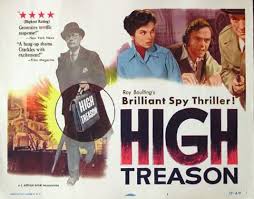
Ordinary people – a mild, cat-loving clerk who works in the docklands, an ex-RAF officer with a small electrics shop – meet under the auspices of the Elgin Modern Music Society and whisper significant things to each other like “March 16th”. The music itself is not bad: minor key meanderings and all, but not as awful as the film-makers intend. An undercover policeman has infiltrated the Society and can’t quite conceal his distaste, much to the irritation of his neighbour, who is valiantly trying to give his all to the music. This is an uncredited part by Michael Ward, a character actor used as an instant signifier of otherness, effeminacy and pseudery. The Society, it turns out, is the front for a faction whose dark intentions do not brook sabotage and indiscriminate killing. A slick, refined MP (more Tom Driberg than Oswald Mosley) is waiting in the wings to seize power when the country has been brought to its knees. Praise be, that terrible day is averted,  thanks to the efficiency of MI5’s intelligence gathering, and specifically its well-maintained card index system. Our boys foil an all-or-nothing assault on Battersea Power Station at the finale. Together with I’m Alright Jack, this film destroyed Roy Boulting’s left-wing credibility. 


I See a Dark Stranger  


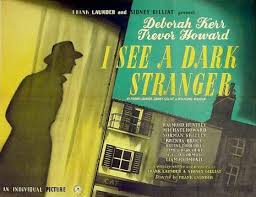
The flaw here is a characterisation of the Irish that can best be described as quaint. Centuries of oppression are reduced to an unreasoning downer on Oliver Cromwell. How can you tell that the film was made by a pair of Englishmen, confirming Bridie Quilty’s worst suspicions of Englishmen?Frank Launder and Sidney Gilliat clearly have The 39 Steps in their minds. Taken in the right spirit – which is to say, very, very lightly – Dark Stranger is enjoyable as comedy and moderately exciting as hokum. Worth watching for Trevor Howard (my favourite leading man after They Made Me a Fugitive), and the young Deborah Kerr (as Bridie) is every bit as radiant as the young Ingrid Bergman.


It's Not Cricket


https://www.youtube.com/watch?v=UJRrqucPoxk


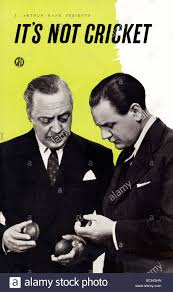
Basil Radford and Naunton Wayne were as loved in their day as another immortal double act, Morecambe and Wise, and turned up in comedies (naturally), thrillers (The Lady Vanishes) and even, improbably, ghost stories (Dead of Night). They carry It’s Not Cricket all on their own, and a very light vehicle it is too. The Morecambe and Wise comparison suggests itself because one routine here, in which the bumbling duo inadvertently wreck a high-toned theatrical performance, anticipates a scene in Eric and Ernie’s The Riviera Touch. To see the distinguished thespian Maurice Denham ham it to the hilt as a comic Nazi is to appreciate that everyone starts at the bottom. The Producers comes to mind, but then it’s quite easy to start thinking of other movies when watching It’s Not Cricket. Anything for a bit of distraction. 


Law and Disorder 


From the same team – Charles Crichton, director, and T.E.B. Clarke, scriptwriter – that made The Lavender Hill Mob, and what a come-down it is. Michael Balcon, the Ealing Studios producer, and missing because Ealing was winding down in 1958, clearly was more than just an administrator. Law and Disorder strains to turn the old winning formula – about amiable professional criminals, witless law enforcers, maverick English characters – into a coherent storyline. Michael Redgrave was never a natural at comedy. There was always too much going on behind that urbane front. On the other hand, anything in black and white with walk-on parts by Irene Handl, John Le Measurer and Lionel Jeffries will pass the time very nicely, thank-you. Just as long as no-one is expecting The Lavender Hill Mob. Scrolling down to the comments, an informed person (Ted Glen) relates that Jeremy Turnham, who plays Colin, went on to write the cult children's TV series, Children of the Stones, which is a quietly mind-blowing fact. NB This film has been removed by the copyright enforcers. The Lavender Hill Mob I could believe... 


Made in Heaven


An attractive bit of fluff about an attractive bit of fluff, from 1952. The plot revolves around the Dunmow Flitch. It hadn't  registered with me what a Dunmow Flitch is, despite possessing the Dick Miles album of the same name, which shows that enjoyably lightweight old films can be more educational even than folk music. The Dunmow Flitch is a custom from the town in deep Essex: a side (or ‘flitch’) of bacon is awarded to the married couple who can convince a judge and jury that in a 'twelvemonth and a day' they have 'not wisht themselves unmarried again’.  Young marrieds Basil (David Tomlinson) and Julie Topham (Petula Clark) enter the contest just at the moment when a strain is put on the relationship by the arrival of a Hungarian housemaid (Sonja Ziemann). Basil and Julie live in a household with all his family in a grand mansion, which makes sense only when you learn that the Hon. William Douglas-Home wrote the original story, and Sir Alec was his brother. The housemaid is a vacuous seductress who turns the head of every man who sees her. The charm of the film is reflected by the charm of the players. David Tomlinson is the original charming man, and deserves to be remembered for more than Mary Poppins. Petula Clark was never more than a pretty wee thing in a corner of the British film industry, and went on to find her true metiér as a homegrown chansonnier – and then there was ‘Down Town’! – but she lit up every film she appeared in. And with a supporting cast of notables such as Dora Bryan, Alfie Bass and Richard Wattis, how can Made in Heaven fail? How can Basil and Julie fail? The film pits marriage against romance and concludes that there is no distinction. It loads the argument just a little by casting a teenage Petula Clark as the wife. For all its glamorous Hungarians, Made in Heaven is very conventional, chaste and sweet. But why not Maid in Heaven? It's a minor point, admittedly, but the missing pun would put an even greater shine on all the bliss.   


Midnight Episode 


Stanley Holloway plays the Professor, a down-and-out who lives by his wits, and is possibly too shrewd for his own good, as he manoeuvres for advantage from a murder he accidentally stumbles upon. The story is a cut above your average musty British mystery hokum. The clue is in the credits, easy to miss in small print: based on the novel Monsieur La Souris by George Simenon. Musty, by the way, is a compliment in my vocabulary. It is the right word though, as the low-budget film looks and feels like something made around the time of the novel, 1938. It portrays a demimonde of lovable rogues, rascals and quasi-stellar vagabonds – epitomised by Stanley Holloway, who exudes charm even in the gutter – that would be extinct a decade from its actual date, 1950. 


Operation Diplomat 


The viewer’s response to Operation Diplomat depends on whether they’re one of those tolerant types willing to admit the film to the pantheon of so-bad-it’s-good. It certainly evokes a parallel universe unburdened by any link to reality, if that can be counted as a good thing. As it is, Operation Diplomat stands as a textbook example of an early phase in the development of the thriller genre. I realise that Dr Fenton and loyal Lisa Durand are supposed to be a doctor and nurse team, but even so, their nonchalance to dead bodies is breathtaking, and there’s something disconcerting too about their cheerful indifference to their own personal safety. The breakthrough came when thriller directors realised that pathological lack of emotion was scarier in bad guys than good guys. 


The Passing of the Third Floor Back 


https://www.youtube.com/watch?v=A1lDztDieaE&t=7s


A Manichean struggle in a boarding house in 1935. Wild! The thirties was a very strange period, and though the outside world scarcely intrudes into the claustrophobic setting (with the exception of an idyllic boat trip), the extreme times are reflected in every inch of celluloid. Essentially an angelic stranger and an odious parvenu battle for the soul of an innocent skivvy. The stranger was always going to be a tough part to play, but Conrad Veidt pulls it off with innate tenderness and charisma. He’s scarcely as other-worldy as another lodger. Miss Kite, as played by Beatrix Lehmann, is a ringer for both David Bowie and the somnambulist from The Cabinet of Dr Caligari. And though the religiosity of the film is uncompromisingly weird, it doesn’t stint on the thanklessness of the stranger’s mission. Let’s face it, none of the residents of the boarding house are worth saving. Can a woman who wears as much make-up as Miss Kite seriously be considered one of the elect? (This is the issue that barred paradise to Susan in the last book of the Narnia Chronicles.) These reversals, and the tacit acknowledgement that evil is eminently capable of counteracting good, give the film a powerful charge, and, dare I say it, a spiritual frisson. Based on the book by Jerome K. Jerome. 


Personal Affair


https://www.youtube.com/watch?v=CDWe0w-hILs&t=144s

Couched in civilised, understated terms (the values of the film), the strapline of Personal Affair might be the unfortunate consequences of misplaced love. Stephen Barlow (Leo Genn) is an inspirational Latin teacher and Barbara (Glynis Johns) is his pupil, 17-years-old, bright, and a dunce at Latin. She secretly harbours a passionate crush on him. A private coaching lesson at his house culminates in Kay (Gene Tierney), Stephen’s wife, semi-amusedly accusing Barbara of being in love with her husband. Collapse and flight of Barbara. Stephen tries to make things right and phones and meets her. He neglects to see her onto the bus. Barbara disappears. Gossip and innuendo sweep the town. The river is dragged. Everyone is destroyed, or would be, were it not for the British stiff upper-lip, this being 1953. It’s hard to imaginable a world so middle-class and white, populated by such consistently sensitive, reasonable and impeccably behaved characters (barring one or two lapses of judgement) were Personal Affair remade today. The girl’s father, Henry Vining (Walter Fitzgerald), a newspaper editor, is positively eloquent. This is his cheerful assessment of his wife, Vi (Megs Jenkins), before the realisation that something is badly wrong: “My dear wife thinks that human happiness depends on everyone’s mind being an amiable blank.” Even the neurotic aunt (Pamela Brown), who meddles so disastrously, is unusually emotionally articulate. Imagine if the same situation befell the characters in Daybreak. It wouldn’t be a film, it would be a harrowing social services enquiry (this makes me admire Daybreak more). Even so, Personal Affair is far more wrenching than might be expected, and really ratchets up the tension. Alongside Kay, the viewer begins to doubt Stephen. The disintegration of Vi Vining is devastating. This is a typically affecting performance from Megs Jenkins (elsewhere the anxious housekeeper in The Innocents). Although everyone is good, including Michael Hordern and Thora Hird in small parts, and Glynis Johns, as the confused, and largely absent teenager. Could Personal Affair be remade today? Well a sex scene every ten minutes is de rigueur in contemporary cinema: that’s just the problem. And then I remembered Notes on a Scandal, starring Judi Dench and Cate Blanchett, which inhabits the same middle-class milieu, albeit more multicultural and chaotic, and one which is modern enough to admit the fact of sex. Notes on a Scandal, in fact, with a few minor changes, could be the story of the neurotic aunt.


The Quiet Woman 


https://www.youtube.com/watch?v=ZFFaxZYmXnU&t=1879s


If there are seven basic plots in the world, this is the one about the escaped prisoner who comes seeking an old flame for a hide-out. To be honest, it was better done in It Always Rains on Sunday. Then there’s a sub-plot about the unpromising love affair between the secretive pub landlady, Jane (Jane Hylton, a touch on the pallid side), and the smuggler/gentleman painter, Duncan (Derek Bond), a rubbish painter. Does it matter? Not a bit! We don’t demand transcendence, just a pleasant potboiler to put us in our comfort zone. This does the job very nicely thank you. The Sussex location is evocative; Harry Towb makes his screen debut as the renegade Jim, and Dora Bryan as Elsie, the maid, is, well, very Dora Bryan, which is always a good thing. 1951.  


The Rocking Horse Winner 


https://www.youtube.com/watch?v=E5F_DMNN8zQ&t=3s


It strikes that this is a deeply subversive film. It’s not just the anti-materialist message wedded to an eerie story. That would makes for a powerful experience in itself. There are also disturbing subliminal sexual undercurrents, which would be too crude to spell out, so you shall have to discover them for yourself. D.H. Lawrence wrote the original story. It’s a great performance by Valerie Hobson, the ultimate English rose, which makes her cupidity as Hester Grahame all the more shocking. The scene with the shabby fence is unforgettable. All lingering prejudice against Hobson – mostly to do with Estella’s disconcerting metamorphosis in Great Expectations – is erased by her role here. John Mills stars as Bassett, the ex-horse racer handyman, and he also produced. But what is it about the supernatural and children that makes for such uncomfortable viewing? The child in peril is Paul, played by John Howard Davies, the very embodiment of smiling innocence, and every bit as lovable as he is in Oliver Twist. And there is nothing, not money, not his cosy middle-class background, not his good intentions and sweet character, not the love of his mother; nothing can save this lost boy from falling into profound evil. The pessimism that permeated English cinema and English culture at the time (1949) reaches its apotheosis in The Rocking Horse Winner. No ending is as bleak as this. 


So Long at the Fair 


https://www.youtube.com/watch?v=RVQG_UgM60U&t=60s

Here’s a plot that is perennially intriguing: ordinary couple do ordinary things – here a brother and sister arrive in Paris for the Exposition Universelle in 1889 – only one party disappears, and everybody is in flat denial that the party ever existed; protagonist doubts sanity, etc. It was used, in another context, in The Phantom Lady, a noir in which Elisha Cook Jnr does a manic Gene Krupa turn, and whose fate oddly mirrors its plot in that no-one has seen it or knows of its existence. Anyway, there’s a satisfyingly plausible explanation for the mystery here (The Phantom Lady has some hokum about a mad criminal genius). Jean Simmons is very winning as a damsel in distress, and David Tomlinson is as personable as ever. Only Dirk Bogarde’s quiff strikes a jarring note. 


They Made Me a Fugitive  


https://www.youtube.com/watch?v=42rPXQE2fcU&t=17s


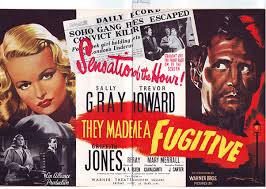
What a terrific film! The title alone is to be savoured, smacking of outsider angst, bitterness and anger. The ‘Me’ is a glowering and sullen Trevor Howard as Clem, who, finding it difficult to adjust to peacetime life (the film was made in 1947), joins a gang of black marketeers for kicks. He and the gang leader, Narcy (short for Narcissus: Griffith Jones), a vicious psychopath, form an instant mutual dislike. After expressing distaste about graduating from cigarettes and nylons to heroin, and with some sexual rivalry implied, Clem is framed by Narcy and is sent down for fifteen years for the murder of a policeman. He escapes, and heads to London to perpetrate his revenge. The British gangster genre supposedly began with Brighton Rock, but They Made Me a Fugitive did it earlier and better (I might be being unfair, as I haven’t seen Brighton Rock for a long time and I quite liked it). It was directed by Alberto Cavalcanti, also responsible for the ‘Christmas Party’ and ‘Ventriloquist’s Dummy’ sequences in Dead of Night (i.e. the best bits) and the wartime ‘Germans in Arcadia’ shocker Went the Day Well. There’s is a big difference between cynicism and evil, the film tells us, but the distinction is lost on most people. Every word delivered by Trevor Howard (a terrific performance) is etched in acid, while Narcy’s speech is a strange compound of the hard-boiled and surreal, as when he sneers at a henchman who refuses to carry a gun, “Don’t be so reactionary, this is the century of the common man” (this, with full-on contempt). Sparingly used expressionism heightens the hallucinatory effect. The undertaker’s used as a front for the gang’s activities is as memorable as Mrs Wilberforce’s detached dwelling in Kings Cross (The Ladykillers) or Norman Bates’ house (Psycho), and is, wonderfully, adorned by three giant letters on the roof – RIP. The violence which erupts so suddenly and shockingly in Went the Day Well is mirrored here in the scene where Mrs Fenshaw (Veda Hope, the boiler-suited union girl in The Man in the White Suit) provides the fugitive with food, a bath and clothes but at what price! We see that Clem is the scapegoat for the rottenness that permeates society. It's a pessimistic view, but They Made Me a Fugitive was made in 1947, a bumper year for pessimism.


Trent's Last Case 


 https://www.youtube.com/watch?v=WdLYu5Mc8Z4&t=624s

This British B-movie stars Orson Welles and the great Miles Malleson, yet it creaks so badly that I was forced to abandon viewing after about ten minutes. The same thing happened when I tried a second time. If anyone out there is more patient, perhaps they can tell me about Orson Welles’ guest cameo. For my part, I saw enough to know that Trent’s Last Case is no The Third Man, and the biggest cuckoo clock in Switzerland can’t turn it around. 


Turn the Key Softly 


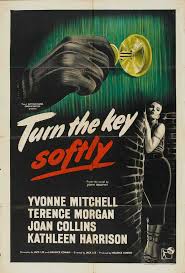
Three women are let out of prison together and the film follows them as they criss-cross through the first 24 hours of freedom. They embody three types of womanhood: Monica, “still young”, her girlfriend tells her, and noble and troubled (Yvonne Mitchell, a shoe-in for these roles); Granny Quilliam, a good-hearted, simple soul, inveterately drawn to petty shoplifting (Kathleen Harrison, a welcome presence whenever she turns up), and Stella, pretty and shallow and full of girlish acquisitiveness (a perfectly cast Joan Collins). The positive qualities of Turn the Key Softly include sensitively drawn characterisation and a lustrously filmed London; the West End resembles Wonderland in 1953 (and Cannonbury, unseen, stands for boring respectability). The slide into melodrama towards the end can be forgiven: Turn the Key Softly still makes better viewing than The Snows of Kilimanjaro, starring Gregory Peck and Ava Gardner, the film Stella whiles aways the afternoon with. I know because I once tried watching it myself.   


The Two-Headed Spy 


Ostensibly a British flag-waver about how we won the war. Again. But all these fifties films set during the war had a dual purpose, and Two-Headed is just about right. Jack Hawkins is known for his stiff upper lip, but here, living a lie as a British spy promoted to German officer, his denial of emotion is complete, and he is utterly broken once he lets his guard down. The film offers a case-book study of repression, and offers a few sharp shocks by way of catharsis. In contrast to films actually made during the war, which are sanguine and glib to the point of silliness (see Contraband), post-war British cinema consciously aimed to assuage the national trauma that was World War 2. Jack Hawkins is clearly one of the walking wounded, and is clearly one of us.  


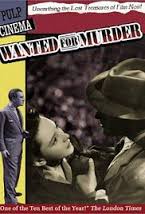
Wanted For Murder 


https://www.youtube.com/watch?v=RwECKqAYR7k&t=57s

From out of nowhere, here’s a film that sheds light on the Peeping Tom controversy. Peeping Tom, made in 1960, was the first film Michael Powell made without his partner Emeric Pressburger since 1937’s The Edge of the World. A portrait of a serial killer, it uncomfortably made the link between film, voyeurism and sex crime, and outraged taste and decency upon its release. For an analogy, imagine if P.G. Wodehouse had followed through Uncle Fred in the Springtime with Last Exit to Brooklyn. A subsequent rehabilitation, led from the front by Martin Scorsese, means that we’re all supposed to hail Peeping Tom as Powell’s masterpiece. I’m not convinced. My own feeling is that Peeping Tom is as nasty and unpleasant as first supposed, and Powell went off the rails without his long-time collaborator’s steadying influence. Wanted For Murder blows that theory right out of the water, as a screen nasty from 1946 about a psycho who goes about London parks strangling women co-written by Emeric Pressburger. It’s every bit as glib about the desperate subject matter as Contraband is glib about World War 2. The tone of Peeping Tom was inappropriate too; that was part of its problem. The viewer began to suspect that Powell was indulging his macabre sense of humour, or worse, his in-jokes, at their expense. Cheerfully despatching Moira Shearer, the star of The Red Shoes, for example. What was that all about? But more than anything, Wanted For Murder raises concern about Eric Portman. What a strange cove he was, consistently drawn to dark and ambiguous characters. Let’s see, there was Eddie in Daybreak, a hangman in his secret life and catatonically numb in everyday existence (Wanted For Murder also treats of the devastating consequences of the hangman’s profession), and there was Thomas Colpepper, the celebrated deviant JP in A Canterbury Tale, sociopathic seaman Hobson in We Dive at Dawn, and an aloof and rigid patrician in A Child in the House. To this list we can now add serial killer Victor James Colebrook to the list. It makes you wonder about Portman the man. A tormented homosexual, I gather, without knowing much about it. PS You have to be eternally vigilant with Apple’s spellcheck facility: Emeric automatically turns into Emetic.   


« Previous Page